How to choose Singapore cn2vps to obtain a stable and low-latency connection is a common purchasing question for Asia-Pacific and Chinese users. This article dismantles network lines, node locations, bandwidth and quality, delay testing and operational support to help technicians and decision-makers quickly select suitable solutions.
CN2 is not a single product, but a type of operator line strategy targeting international high-quality interconnection. When choosing Singapore CN2VPS, you should make it clear whether the VPS is truly connected to CN2 or equivalent high-quality backbone, as well as the interconnection capabilities between the operator and the destination, which directly affects cross-border latency and stability.
Key parameters include line type, bandwidth commitment, network peak performance and upstream paths. Prioritize attention to whether the line is directly connected to the target network, whether there is a dedicated line or optimized routing, and whether SLA or bandwidth usage transparent statistics are provided. These all affect long-term stability.
Don’t just look at the nominal bandwidth, pay attention to the quality and billing policy of the bandwidth. Concurrency peaks, uplink and downlink symmetry, and whether there is a capping or burst bandwidth policy will all affect the real experience. Give priority to solutions with clear bandwidth guarantees and traffic management mechanisms.
The location of a node close to the target user does not completely guarantee low latency. The key lies in whether the forwarding path is optimized. Evaluate the transit section from the Singapore node to the destination, whether there is a direct interconnection to China or other major markets, and whether multi-line load balancing is supported.
Required to provide actual test data or self-test during trial period before purchasing. Use tools such as ping, traceroute, and iperf to measure delay, jitter, and packet loss rate, and repeat the test at different time periods to determine peak performance. Only by authentic data can you make reliable judgments.
Good technical support and monitoring capabilities can quickly restore services when the network fluctuates. Pay attention to whether the provider has 7x24 monitoring, fault response processes, log and traffic analysis capabilities, and whether it supports routing customization and emergency switching strategies, which all affect overall availability.
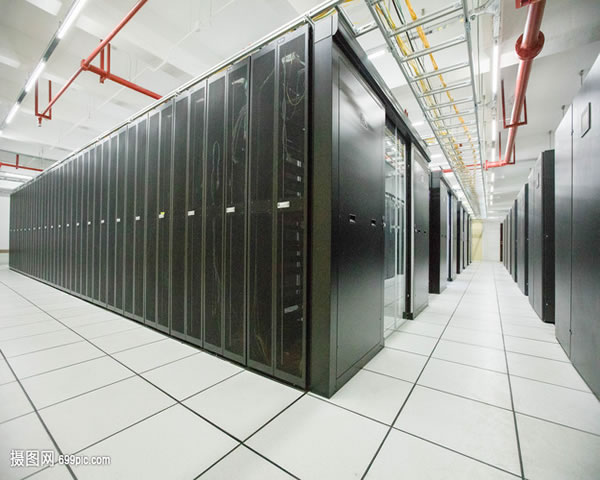
While ensuring stability and low latency, cost and performance can be balanced through multi-node redundancy, intelligent routing and on-demand elastic expansion. Choose an appropriate bandwidth level based on your own business traffic characteristics, and review network performance regularly to avoid wasting resources.
To choose Singapore cn2vps to obtain a stable and low-latency connection, you should make a comprehensive judgment from five aspects: actual line access, bandwidth quality, path from node to destination, measured data, and operation and maintenance support. It is recommended to conduct small-scale trials and multi-period tests first, and then decide on long-term deployment based on SLA and technical support.
- Latest articles
- Popular tags
-

Share Of The Selection Rules And Best Practices Of Singapore Cloud Server
This article shares the rules and best practices for selecting cloud servers in Singapore to help enterprises choose the right cloud service. -

Operations Guide For Oracle VPS In Singapore: Best Practices For Daily Backups And Disaster Recovery Strategies
Operation and maintenance guide for Oracle VPS (Singapore), introducing best practices for daily backups and disaster recovery strategies: Key points such as backup frequency, snapshots and object storage, cross-region replication, encryption and automated recovery, monitoring and drills. -

A Guide To Building A Singapore Private Vps With An Overseas Exclusive Network Environment From Scratch
Professional guide: Build a Singapore private VPS with an exclusive overseas network environment from scratch, covering practical steps and precautions such as model selection, network configuration, security reinforcement, performance optimization, backup and recovery, etc.